What a lovely brace of questions that came up in the exam this morning for my tutees, assuming that you did Macbeth and A Christmas Carol.
If you did then this might help you.
Macbeth
How does Shakespeare describe Macbeth as a male character that changes?
The scene was where Macbeth finds out that the English Army are marching towards Dunsinane.
As a tutor and semi retired (through disability) teacher of English who has taught GCSE for 20 years, covering everything from KS2 Y5 English, through the SATS at Y9, to Degree Level English tasks and exams, when I saw this on Twitter today, I rejoiced.
My students were taught specifically to take a task where there is a section of text to analyse, to do it in a certain way. First, you analyse the given text. Then you start at the beginning of the story and work your way through the text, adding quotes in to prove your points, right through to the end.
With points and evidence given, you then have to explain (using those lovely PEE chains) but a lot of students stop there. They make a point. They back it up with evidence.. They explain it…just the once.
That is where the marks go down because the examiner and marker are expecting a development of your critical thinking to get you up in the higher grades.
If a student is taught to use a PEED chain, then it becomes a point, then evidence, then explanation and then, two more things it could mean.
How to do this will be covered in the next section.
A Christmas Carol (Dickens)
How does Dickens describe the effect of greed?
The Christmas Carol extract was when Belle breaks off the engagement with Scrooge.
Again, what a wonderful text to choose. Bravo to whoever chose that one as it is the one scene in the entire thing that really shows the extent of what happens when greed overrules life and love and nothing bust nastiness, in the character and epitome of Scrooge, results in someone that is cold and brutal to all that he meets.
To show you what I mean, think of the text for a moment. You make a point. Scrooge loves money more than Belle. You use the bit where he says he is doing it for her and then you explain, saying how he cannot put her first in his relationship. But to add the extra two to develop your critical thinking, you could think what others in your class might possibly think.
So 5 things are done. Not 3.
Point, evidence, explain, explain again and then add a final thought in, before you go to your next point. So, Scrooge loves money more than Belle. The text is where he says he’s doing it for her. Your thought is that he cannot put her first. Then, the other two ideas might be that his love for money is meant to make the reader think am I the same? (reader theory) and how this scene is a metaphor for how selfishness can destroy love in all aspects of life, if we let it.
Suddenly, the depth of your paragraph and answer is so much better, has more depth and if you do this all the way through the essay, it also becomes twice as long as it would be, if you are using the famed and well taught ‘PEE approach.’
I always tell my students when doing this to imagine me holding three fingers up and smiling, as if to say “make sure you’ve got your three explanations in there.”
I’m not typing this to make you think oh my God.I did it wrong. Entirely the opposite actually, for I am sure your answer will be fine and great how you did it, but for future GCSE students, this could be a way forwards.
Let’s see what happens in late August, shall we?
But let me leave you with this, to see if any emotions of this went into your Christmas Carol essay earlier.
The usual form of revision is to revise (however you revise) until the exam, but this only tends to confuse students even further.
So how can a student resolve the issue of confusion on exam day?
The answer to this is to plan accordingly and take a bold step by doing nothing at all to do with your studies the day before the exam and that includes the morning of the exam.
How can you do this?
The answer is simple. You plan when you see your examination timetable. (see below)
So, looking at the English timetable for 2023, including the dates of other exams, we see 4 dates for the English exams.
17th May……… Lit Paper 1
24th May……… Lit Paper 2
5th June………. Lang Paper 1
12th June…….. Lang Paper 2
This then, is what I propose and it is a tried and tested model for revision.
15th May – DAY OF TOTAL REST
16th May – Bio exam 9am
16th May – TOTAL REST AFTER!
17th May – English Lit Paper 1
22nd May – DAY OF TOTAL REST
23rd May – English Lit Paper 2
4th June – DAY OF TOTAL REST
5th June – English Lang Paper 1
11th June – DAY OF TOTAL REST
12th June – English Lang Paper 2
REST DAYS = NO REVISION, GO TO ALTON TOWERS, THE CINEMA, SKATING; WHATEVER YOU WISH BUT NOTHING TO DO WITH STUDIES. TOTAL REST.
In 27 years as a teacher I have always taught this technique and I have used an analogy to explain it which involves the household task of ‘dusting.’
Yes, dusting!
When parents dust a room, if you look at the air as the light comes through the window, you see the dust particles in the air, floating before they settle. Gravity does the rest and it takes time to settle.
Revising is the same.
The dust is the subject information, whatever the subject. You revise how you revise and it needs time as information, to settle into your memory.
By having that DAY OF TOTAL REST the day before the exam and leaving revision books at home on the morning of the exam, you’ll be ready to sit the exam.
If you have revised fully, it will almost feel, when you begin to write, that you want to be sick with the information inside you. It simply needs to come out of you.
Try it. It improves scores by at least a single grade, assuming you have revised fully.
Please consider this method of timing your revision and do it.
So here we go again. June is nearly upon us, here come the Lit exams and then the Language ones, beginning on June 5th I believe. Now that is not long to go.
Paper 1 and Paper 2 of the Language Papers cover 80 marks each so “let’s do the Math,” as the Americans love to say. 2 forty minute sittings where 2 things are written can lose you the best part of 80 marks if they are not handled correctly. That’s the difference between a 9 and a 4 most likely. The whole concept is utterly terrifying!
Section A of each exam is 4 or 5 tasks tasks long. AQA and the likes can change one task into two parts. It has been done before. That is worth 40 marks for all that. Then you get a single thing to write for 45 minutes or so and on Paper 1, there is usually a picture to use as a springboard for your ideas, which is why we teacher loons use spring boarding techniques from Year 7. Ever wondered why you read the last chapter of Skellig and the teacher hated it so he asked you to write your own final chapter, for display?
My lot did just that once!
But the 2nd task asked for, should you choose it, is not a description, but a descriptive account of something happening. How easy is that?
For a lot of you, you will see it and think Oh My God! How do I do that? Your teacher should have practiced this with you and if they haven’t then have a gripe at them, but assuming they have, you should be able to do what I am about to ask you to do.
Task
Read through the following story (written by me and taking 45 minutes to type up) which uses a TV programme as a springboard (see previous post about BBC Ghosts) and make a list of as many things you notice in it.
Eg. (1) Start far left) (2) Indent next paragraph. (3) Speech on its own line….and so on as you go. There are a good dozen things in this account/story that you could say “if this is how it is done, then this is how I have to do it in the exam.”
And that, you see, is the whole point.
Read and create the list as you go.
Happy hunting.
Survival Issues
Frances Eleanor Button was once again walking around the gardens of her home after just spending some time in the graveyard she had made for her pets when she silently came across Mike and Alison in the garden, preparing the ground for their seasonal vegetable planting.
This was her usual daily walk, as she admired the beauty of God’s nature around her in such glorious grounds as Button House. As she saw them both, she came to a stop and introduced herself.
“Ahem,” she muttered, “Good afternoon Alison.”
“Oh, hello Fanny,” replied Alison, but before she could continue, Fanny continued.
“I remember when we had gardeners do such things as this. We used to grow lots of vegetables that were eaten in the house. They were hard times for all of us.”
“They are now, as the energy prices and food prices have just gone through the roof. We thought….”
Fanny had a habit of interrupting anyone as she still saw herself as the Lady of the House. She was about to do just that when Alison gave her a look as if to ask her to stop. Mike just looked up from his onion rows and knew they would be in conversation for some time. As he carried on, Alison changed tack.
“Actually Fanny, there was something I meant to ask you after our conversation the other day.”
“Oh, which conversation was that?”
“The one where you mentioned the trip on the Titanic. I meant to ask…”
“Oh, that!” replied Fanny, before Alison could finish. I would rather forget about all of that if you don’t mind.”
“Yeah, I know, but I had an idea I wanted to talk to you about.”
By this time, Fanny was intrigued at what would come next, so the two of them agreed to go and sit on the garden bench nearby, so they could talk. When they got there, they both took a seat and Fanny waited, which for her, was not the normal thing she would do. Her bombasticity would usually mean she dictated the pace in conversations.
“Well, “ said Alison, “the thing is……” She was thinking of how to word it, because it was a delicate subject. Then she had the idea.
“I wondered if you felt anything at all about not going on that journey.” she watched as Fanny exploded like a small and badly placed bomb.
“Not going? I was glad not to go when I found out the truth of the whole sordid…” She was beginning to get agitated, so it was Alison’s chance to interrupt.
“I didn’t mean to hurt you Fanny,” said Alison. “It’s just that sometimes, people feel guilty about such things as this; things out of their control. Modern psychologists call it ‘Survivor’s Guilt, because had you been on the journey….” She paused, waiting for Fanny to catch up.
Fanny just stared at Alison, making contortions with her face as she tried to sort this news in her busy mind. It seemed, to her anyway, that the longer and older she got, even in death, the more difficult it became to understand such things and the more intransigent she became.
Alison continued.
“If you want to discuss it, you know where I am,” she uttered and gave Fanny a look that meant a hug was intended but could never be given. She could see the pain in the face of her secret, favourite Aunt. As she rose and walked slowly away, she hoped that soon, Fanny would reach out to her. Fanny was left to contemplate what had just happened.
***
As the days passed, whenever Alison and Fanny met, or passed each other in the great house, there was a sense of unease in the both of them. But each time, deep down, Fanny felt as if she needed to unburden herself of her guilt at being the survivor, only to fall at the hands of her lecherous husband when he pushed her out of that window all those years ago!
Survivor’s Guilt is a powerfully felt emotion! It is a response to an event in which someone else experiences loss but you do not and is often very dangerous if left unchecked, which is why Fanny was struggling so much in recent weeks. She had lost so much in her life that in her death, things only seemed to get worse, which is why she was struggling so much in recent days towards her husband of so many years ago.
Just as her mother had seen her father lose everything, so too could she remember the way her mother’s mind melted at the embarrassment of a father who was so dangerous in his spending, something that the Mathematician in her could never abide.
She could see the mistakes and felt bitter towards both her parents as a result, which is why she was as crusty as she was to most people she came into contact with, whether dead or alive. She knew she needed to share with someone and on one cold winter’s morn, she decided that enough was enough and she would finally ask Alison to sit down with her to sort her mess out.
The day came all too quickly for both ladies and Alison made sure the others were busy so that when Mike went to do the supermarket shopping, she and Fanny could spend some time in the lounge, going through her dilemma.
The two of them met at lunch time and it began rather awkwardly, for both!
Alison began.
“So, Fanny, you said to me that you wanted to share something?”
“Yes,” replied the fidgety lady of the Manor House. “It all began when I was a young woman. My father lost everything. My mother blamed herself forever, till her death and quite possibly beyond, but she passed to heaven, or wherever people go.”
“How did you feel about the whole thing?” enquired Alison.
Fanny explained further.
“You see, mothers had no control over fathers. Women did not have the equality you have with your husband now. We women suffered abysmally at the hands of people like my….” She paused.
“My husband!”
Pushing that last word out was difficult for her, for she loathed the man for what he did, to her and to the rest of the staff in the house. Alison had heard the story from Julian, who gloried in the knowledge of it. Fanny continued.
“In the end, there was nothing we could do, as women in those times. But the blame still rested squarely on us, for not being able to find a way to make things right.”
“That’s where you’re wrong,” said Alison, not waiting for the reaction. “When you married, you made vows, yes?” Fanny nodded.
“Who broke those vows?”
Fanny’s face changed at such a thought! She had never thought of such things or that it could be different than she envisaged. But she could now see the logic in Alison’s thinking. Why should she blame herself? She was thinking just that when Alison spoke again.
“So in the end, you should only feel sorrow for those things you know that you did wrong!”
There was a pregnant pause as the words settled into Fanny’s mind, as something began to change in her. She felt it like a hand had been placed on her right shoulder, but when she looked around, half expecting to see the captain, or Thomas, she saw no one. It was like some invisible, divine hand had touched her very soul!
As they parted, Alison wondered just how much her words had helped Fanny to understand that her loss of life, as well as property, health and identity were important to her, but they were minor in the larger scheme of life!
Little did she know how much a change this meeting would bring. It took just one evening for things to change! When they all awoke the following morning, they did so to the sounds of birds singing their morning songs in the branches of the trees in the grounds of the great house? But it took the Captain to make the observation, as he exclaimed at breakfast, the words he never expected to say!
“I say, Fanny,” he began, “You didn’t do it this morning. Are you feeling okay?” he asked. He wasn’t sure, but he asked, more for clarity than anything else and received the clarification he yearned for.
“Yes,” said Fanny. “No more leaping from bedroom windows for me!”
The rest of the people present did not understand the complexity of her words, choosing to react differently. Robin asked what she meant. Thomas stared in silence. Pat tried to make a joke of it all, as was his way. Humphrey’s head even chimed in to make mention of how quiet it was that morning!
By then, as he said it, the Captain realised that there was one moment still to come if Fanny had dropped her demons and had ceased to be the terror of the household. She seemed much more at ease and that worried him greatly, as he thought of Mary before she ascended and of Kitty and how the glow shone around her when she too was taken.
When would it be for Fanny? The very thought of losing her concerned him more than ever!
So, here come the next few months in quick succession and before you know it, the 17th May will soon be with us and you will be sitting the first of 4 exams in English which are designed (by an ever increasingly nasty government) to put you to the test in your reading, comprehension and creativity.
The exam dates are as follows this year:
17th May – Literature Paper 1
24th May – Literature Paper 2
And then…
5th June – Language Paper 1
12th June – Language Paper 2
The Literature papers are what they are; combinations of the three texts you studied, such as Macbeth for the Shakespeare, A Christmas Carol for the 19th Century text and An Inspector Calls, for the modern text (play). You may have your own variations and as long as you answer the questions, keeping to the question, then all shall be well, but be careful.
I have used an analogy a lot in my teaching, which I will share later and since 2014, not one single student I have taught it to, either in a classroom, or at their home through tuition, or online in the same fashion, has ever gone below a C grade, when that was the way, or a Level 5, which we now consider to be a good C grade of old, or at least colleges and employers do.
So, all you can do is learn and revise the important quotes from each text that you think fit the bill. Don’t let anyone tell you that your quotes are rubbish. You think they are worthy of learning and they will stay with you whether you get the chance to use them or not, so believe me when I say this, the text questions that ask you to look at a chunk of text and then analyse the rest of the book mean just that. Write about the text in front of you, then what went before it and then what happens after it to the end of the text.
If it is a 5 act play, learn 4 good quotes from each act, like “is this a dagger I see before me?” Learn what it means, where it fits into the story (context) and learn how to use and develop that lovely thinking mind you have. In essence, with literature, there is no wrong answer, so long as your point can be backed up with evidence from the text. So, when you say Scrooge is a miser (notice the present tense there, on purpose) use the infamous quote of “he was a hard fisted, hand to the grindstone, Scrooge, a squeezing, grasping, clutching, covetous old sinner.”
I love it when Rizzo does the line in the movie!
Then you have the poetry to do as well, which your teacher should have prepared you for, but with each poem in the Power and Conflict section covered on this website, give them a read and take a few notes. You may not always agree with me, but that is the joy of poetry. I respond as I do because I am nearly 62 and have seen so much more life and experienced so much more love and joy, as well as pain.
I’ve also been in so many incarnations, re my work. I was not always a teacher, but a miner, driver, chef, tour guide abroad, so when I read a poem like Charge of the Light Brigade, because I was 3 years a soldier, it makes me respond in a certain manner.
With those exams done – I purposely do not mention the unseen poems here because I have dealt with them elsewhere on this site – you then have the 2 language exams. Now if your teacher has been any good (and many are not, sadly) then s/he will have set you up and prepared you, but ask this; where is the chance for many marks to be lost?
The answer, of course, is found in Section B of both exams.
80 marks across 2 exams!
That is only my opinion, of course, but so many things go wrong with creative writing in exams.
Let me tell you a true story. Sarah was one of my students. She worried like mad at the beginning of the year. She was an adult student. She had not got that elusive C grade but was so good at analysis of a text so Section A of both exams were relatively okay for her, but this teacher unlocked something in her creative side, encouraging her to go for it in such writing and she found she loved it, but the description/story in Lang Paper 1 and the article in Lang Paper 2 threw her completely.
So I shared the analogy I mentioned earlier, of a train journey. Writing a story or a description or an article, is like taking a train from one place to the other, say from Grantham to London, or A to B. If you stay on the train, you will get off in London and will achieve success.
Writing these 40 point beasts is the same.
If, however, you get from A and half way to B and have what we might call a Brainwave, an idea that seems so good and you ‘go with it’ then you may just end up at C, or Ipswich, even though there is nothing wrong with Ipswich! Your story then does not resemble the task, only in the first half, so the maximum a marker would give you, even if brilliant, would be 20 marks out of 40.
There goes your level 5 down the river! Or a 9 becomes a 7 so quickly because you have lost so many marks by making that error.
Then, when you get to the article, you do the same thing; share a great idea about how to argue against the opinion shared – always that format now with AQA – and you realise that there are three or four words in the title that you ignored totally. Thus, you only did half a job.
Look at a paper 2 article question from AQA and see what I mean.
But that article is important, so how do you write a measured article for a website, or press paper etc? Here is a link for you to see. You may recognize it.
BBC Bitesize can appear a little patronizing at times, but this one is so good so you need to look at it to get this right, for what they say here is excellent for this last exam of the English Language side of things.
The one that I looked at earlier today with my students asked you as students to consider the idea that we have become “obsessed with travelling long distances,” whilst at the same time saying that such things were bad for the planet. How much did we agree with that statement?
I asked for a plan and one student did a fabulous one, which I am pointedly not sharing here, but it was only one sided, when according to the link above, it needs to hit both sides of the argument based on the words in the title. He had made the same error Sarah did.
This was the question/task
“People have become obsessed with travelling even further and faster. However, travel is expensive, dangerous, damaging and a foolish waste of time.”
Then it asked “Write an article for a news website, in which you argue your point of view on this subject.” It offered 24 marks for content and the other 16 for the old devil called SPAG – Spelling, Punctuation And Grammar.
Note also that it said to plan the thing for 5 minutes, which the student did, but it did not mention the 4 words or think about arguing both sides of each one – expense, danger, damage or foolishness.
So, how do we do it?
The answer is to split the page into two with a vertical line in the middle and then split the page into 4 rectangles. One for each word above.
That’s 8 rectangles!
You then need to figure out why people think these things and why you disagree, assuming that you know why these things even go through someone’s mind. Add your thoughts into each rectangle.
Then you need to write a balanced argument using words like on one hand and with all things being equal, assessing both sides of the argument asked for, before you then write down what you truly believe at the end. Then, you have a balanced argument worthy of a 9 mark and grade and will simply blow the mind away of your markers.
Is this what you wish to happen when they read your exam script? I certainly want it for every single student who reads these thoughts. If you do not or are not bothered by what you get, then you are half way to failure, which is a great pity, for we teachers only want the very best for you in late August.
So go for it and blow us all away with your thoughts and writing. That’s the point of exams in the first place, to be a place where you get your chance to show off your skills.
Okay, so you do the paper where the unseen poetry is and if you go to the AQA web page and download the exam paper that has the two poems about London and Edinburgh at the end, you will see what is needed but you will miss something that is unique to this paper.
Check out the marks for the unseen poems and their respective analysis.
The first is 24 marks, plus 4 for SPAG. That is a LOT of marks, to say the least, so it is a straightforward and simple question to answer.
The next and last question on that exam paper is worth 8 marks!
That, to me, means not a lot of time should be spent on it.
With this in mind, I decided to have a look at one particular year and here are my thoughts on both poems, which are included.
***
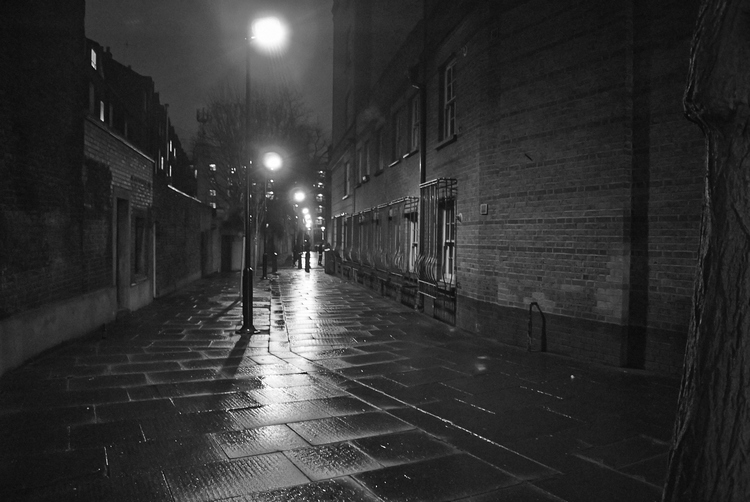
A London Thoroughfare 2 A.M.
They have watered the street, It shines in the glare of lamps, Cold, white lamps, And lies Like a slow-moving river, Barred with silver and black. Cabs go down it, One, And then another.
Between them I hear the shuffling of feet. Tramps doze on the window-ledges, Night-walkers pass along the sidewalks. The city is squalid and sinister, With the silver-barred street in the midst, Slow-moving, A river leading nowhere.
Opposite my window, The moon cuts, Clear and round, Through the plum-coloured night. She cannot light the city; It is too bright. It has white lamps, And glitters coldly.
I stand in the window and watch the moon. She is thin and lustreless, But I love her. I know the moon, And this is an alien city.
Task
Analyse the first poem. Look at methods used to create meaning.
Compare how both poets use similar devices to portray their cities at night.
In ‘A London Thoroughfare. 2 A.M’ the poet presents the speaker’s feelings about the city at night as being quite negative, even though she loves the street she lives on when it is dark. With one person speaking, these are the thoughts of someone, who is possibly an insomniac, being that it is 2am in the morning when she notices these things, but she begins with a strange word, in “They” because when she uses it, the reader is left wondering who has just “watered the street.” It is an interestingly odd word to use at the beginning and the reader is left thinking whether this is a workman from the council who has done this, or some other person who could do such a thing.
Her attitude is one of negativity and this is borne out in the words she uses to paint the image in the head of the reader, or audience hearing this poem, when it says, “it shines in the glare of lamps.” The road shines indicates the sheen from the road after it has been made wet by one form or another, but the use of words like “cold” and “white” make the reader shudder at the image before her eyes. They are meant to have that effect on the reader as they contemplate the simile that follows, when she says the road “lies like a slow-moving river.” The image in the mind of the river flowing endlessly onwards to its destination is one thing, but this river, this road, is “barred with silver and black,” which makes the reader think of the lines at the side of the road and the colour of the tarmac itself as the camber of the road drifts down to the side, where there is usually a kerb and some form of white line.
She then explains what travels up and down this road at night by telling the audience that “cabs go down it.” In this way, she is using the senses and in particular, the element of sight, but in the mind rather than her actual seeing of the cars that travel this road. So far, the scene is a dark one, representing the darkness of night and the colour of corruption that enters the world when daytime falls and night takes over. She mentions how first it is “one” cab and “then another” and how she can hear “the shuffling of feet” as she gazes down this dark and dismal street.
This sense of agony and dismay at the darkness pervades the rest of the poem through to a point where she tips it on its side and then goes at it from another, more favourable angle. She says that “tramps doze on the window-ledges,” which is an interesting, if not provocative word to use in this modern age. Perhaps this is an older poem and not so modern because people tend not to use the word “Tramps” any more. She then follows this up with another insulting term, which is “night-walkers” as they “pass along the sidewalks.” This should tell the reader where this poet is based, by the use of the word, “sidewalks,” as this is typically an American term, whereas in Great Britain, the term would be “pathways” so there is little doubt that culturally, there could be issues with reception and meaning when a British reader picks this up and reads it.
She also says that “the city is squalid and sinister,” a marvellous use of alliteration and immediately, it puts the idea into the head of the receiver who is already thinking about tramps and beggars, with a whole concoction of words going around their heads as they read and think an assortment of negative things about this city. The “silver-barred street” is one that is also very “slow-moving” and she describes it as “a river leading nowhere.” This is a road to nowhere, an endless and dark snake-like road that leads to nothing but trouble and yet, she says she loves the sight before her later in the poem.
From her window, she can see certain things. She sees the moon, “clear and round,” in the clarity of a full moon and a “plum-coloured night. Unable to see the city, she knows its brightness and she knows it has lots of “white lamps” and that it simply “glitters coldly” in the darkness of the night. She stands in her window watching the moon, which a lot of people do, but describes it as “thin and lustreless,” possibly because it represents her own heart towards life in general; dark and unsympathetic, critical of all things around her, she herself is living in darkness, but she is redeemed by the fact that even though this city, her city, is dark and dismal, “squalid and sinister,” she knows one thing that is true in her life.
She says the words, “but I love her.” She sees the black and she loves it. She sees the crime and she still loves the city. It seems then, that there is nothing, not even the melancholy moon, which she knows so well, possibly because she has been up many nights watching the moon until she knows it, to be able to write such a poem as this.
This is how she knows the moon and her city as well, because one has become synonymous with the other and this is why she is able to say “this is an alien city,” full of people from all over the world, full of immigrants brought into the United Kingdom to live and to work and to enjoy what life can bring them as they pursue the dream of health, wealth and the pursuit of happiness. This is why this poem is an effective one at showing just how important the place where we live is to our very psyche.
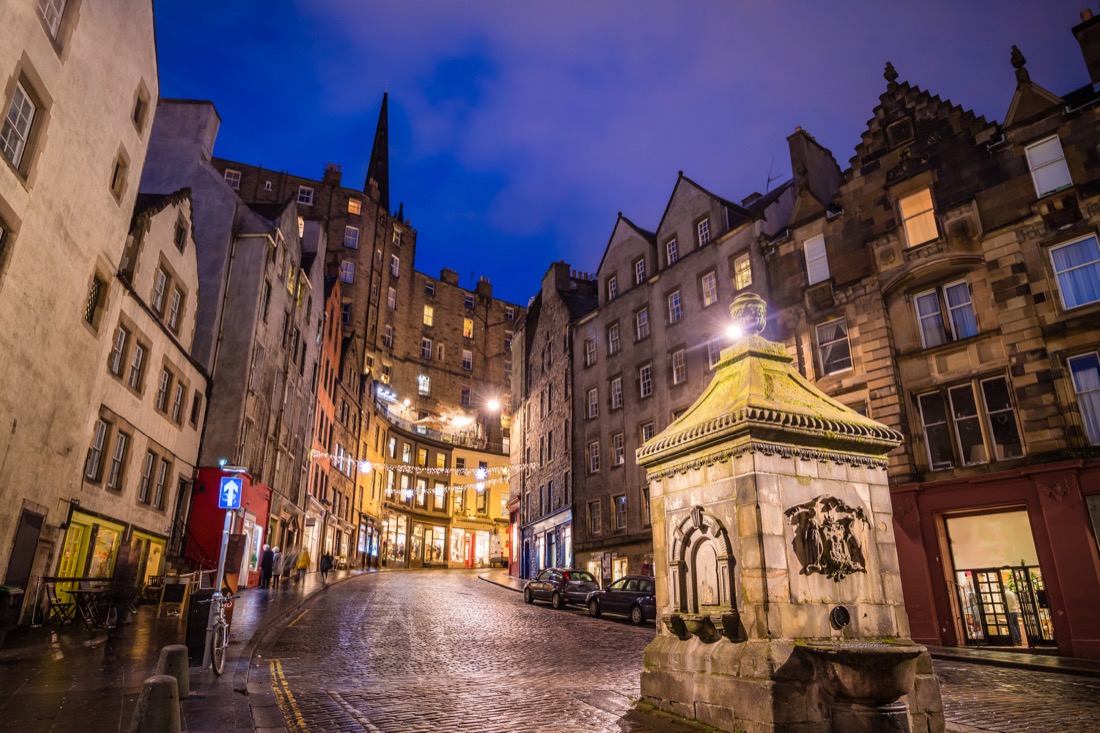
November Night, Edinburgh
The night tinkles like ice in glasses. Leaves are glued to the pavement with frost. The brown air fumes at the shop windows, Tries the doors, and sidles past.
I gulp down winter raw. The heady Darkness swirls with tenements. In a brown fuzz of cotton wool Lamps fade up crags, die into pits.
Frost in my lungs is harsh as leaves Scraped up on paths. – I look up, there, A high roof sails, at the mast-head Fluttering a grey and ragged star.
The world’s a bear shrugged in his den. It’s snug and close in the snoring night. And outside like chrysanthemums The fog unfolds its bitter Scent.
By comparison, even though the use of metaphor and simile, alliteration and differing stylistic devices are used in November Night, Edinburgh, are similar to that of the Lowell poem, this is more positive, so they are similar in a lot of ways, but only to the extent of sharing something of the grandeur of their differing cities at night time. MacCaig says that “the night tinkles like ice in glasses” and the simile is not lost on the reader as the poet describes two things to paint in the mind of the reader the idea of a glimmering, shimmering city, just like ice cubes once liquor has been poured over them. There is a sensuousness to this description which makes the reader feel the warmth of feeling that the poet has for the city of Edinburgh!
He describes leaves that “are glued to the pavement with frost.” It is a particularly strong image that makes the reader think of times like in winter, due to the frost, when dirt and grime of an industrial city gathers and destroys the foliage around it which has fallen and is decaying as we turn from winter into spring. The fact that “the brown air fumes at the shop windows” and then “tries the doors and sidles past” makes the reader all too aware of the industrial grime and the mire of the city in the darkness of winter, but he then says that he gulps “down winter raw” which is a strange mixture of Standard English as well as a Scottish colloquialism, because the Standardised way to say that would be to say “I gulp down the raw[ness of] winter,” like he would gulp down a stiff whiskey to ward off the badness of the weather and the cold it brings.
There is a “heady darkness” about the city as he sees it, a brooding danger that seems to always be there, swirling like a tornado among the many “tenements” where he lives, large, tall tower blocks of dingy flats that in Edinburgh in generations not too distant, were known for being dirty, seedy and filled with very poor people. The poet says that there is a “brown fuzz of cotton wool” about the place, a feeling that this is about as good as it is going to get any time soon and how life in that area at that time leads only to one thing; death.
Then the reader sees the idea of how there is “frost in [his] lungs” due to the coldness of the environment as well as the harshness of the weather. The two have become synonymous with each other as leaves are “scraped up on paths.” As descriptions go about the city of Edinburgh, this is one that shows how grim life is there at that time. But then, he looks up, seeing “high roof sails” and “at the mast-head” there flutters a “grey and ragged star.” This could represent the idea in the mind of the reader as well as the poet that the only thing to come out of such a place like this would be someone who would be almost piratical in nature as the flag and ragged star come to represent someone trying to climb out of this pit of poverty as they try to get on in this life for their better future.
This is then backed up in the final verse, if it can be called that, because this is a graphologically deviant poem, as is the first, but the poet uses a fantastic metaphor in “the world’s a bear shrugged in his den” to paint the image in the mind of the reader or audience of a hibernating bear and to him, that is what this world of ours represents, something that when quiet and peaceful and placid, can move along at a soft and steady pace, but if cornered, or trapped into having to defend itself, it can turn on us in an instant. The poet shows us the image of the bear, “snug and close in the snoring night” as outside, where the cold remains, “the fog unfolds its bitter scent.” This is the epitome of perfection at the end of this poem because it shows the one thing he loves in the guise and shape of a sleeping giant and that, in essence, is beautiful to read and consider in any form of poetry.
Both poets love their city. They see the negatives as well as the positives and they use a number of devices each to get that meaning across to the reader. Where they differ, where one uses more personification and devices, due to its length, they differ in how precise such a description of a city at night can be and as a result, both are successful in portraying the city in the blackness of night.
Arguably, if this is the final thing you do in your GCSEs, then it will be the hardest, for it is extremely hard to get the language and the tone right in this one.
Have a look at a few articles online now, about things like the abolition of school uniform, or euthanasia (killing humans when terminally ill in a kind way) or some other such thing that is both contentious and has two very equal sides to it and you will see what I mean. Trying then, in section B, to write a good, strong, argumentative article, for those hitting the 5-7 grades, is hard.
But hey, if something is worth doing, it is worth doing right!
So, here is an example a student did for me, over 2 one hour tuition sessions, working on the 2021 Paper 2 exam paper, which asked questions based on 2 sources in the usual fashion and then, it asked him to write an article based on the idea that we as consumers need to change our attitudes to buying cheap clothing.
You know the one, I am sure.
This is his work, unedited. See what you think. He did not give it a title and found it very hard going so there are weak areas, but, and I stress this vehemently, this is a student who a year ago, was a low level 4.
***
Must we change our attitudes to buying clothes now?
Is it ethically sound to purchase more and more at the expense of children in less affluent countries being exploited?
The British Standards Agency has quoted Hugo Boss, saying “Consumers should be able to purchase goods without the burden of having to worry about where they are made or sourced from.”
There are two ways of looking at any argument. On one hand, it is seen as unethical to ask every consumer to purchase extravagantly priced items, which they are unable to afford. This is because of the fact that not all consumers earn £50,000 a year to spend on designer brands and the costs that come with them. For example, Apple devices are associated with rapidly increasing prices and the additional costs/ subscriptions. In the same way, the fashion industry uses similar methods to up sell more goods.
On the other hand, customer choice has become paramount in all things. There are many consumers who choose to wear both cheap fashions and designer fashions. A man may choose to wear Lacoste or Hugo Boss shoes but wear Primark socks. There is nothing wrong with this at all.
Perhaps, the only reason why we must change our attitudes to buying clothes now could be because of how top fashion houses advertise their products. For example, the clothing brand Balenciaga created a series of advertisements where they received backlash for how the advertisements exploited children to the extent that the company was seen to be approving of child abuse. This caused the brand to release a statement explaining how they “Strongly condemn child abuse.”
The only way a consumer can overcome this issue when buying clothing, whether that be designer or not, is to research and make an educated purchase. This is so the consumer can ensure that they are not buying from corrupt brands.
One way this could happen is if large corporations, such as Amazon were to oversee how the products sold on their platform are manufactured. If a product is made by children working in poor conditions, Amazon should remove them from the platform indefinitely, because of the fact that large corporations should not stand by as young children are exploited. Balenciaga has amassed a net worth of $51.28 million. If they were to be challenged to the extent that a large sum of profits were lost, this may make the brand reconsider how they present themselves.
Likewise, the same could be said of the giant superstore, ASDA UK could be held accountable for the way they sell clothing. Their brand name known as “George” is best known for selling school clothing at a cheap rate. Blazers and ties will be bought via the school supplier whereas, the more common basic items are mainly bought from ASDA or similar stores.
Should the seller be held accountable for how the goods are sourced?
In the end, the responsibility must be held with everyone to make sound and just decisions when purchasing from preferred brands.
E3YK0A George at Asda fashion2014. Image shot 06/2014. Exact date unknown.
***
Given the fact that on Monday, if when he takes his Paper 2 Mock, for Y11, in preparation for his GCSE exams in June, if he does something like this in the mock and then improves on it in the real thing, as I am sure he will with my help, then he should do very well indeed.
Have a look at some of the finer things in it, like the use of rhetorical questions and make a list of the things contained therein. See what he does with his language and try to emulate him, or even better, write on on the same subject that improves on this.
In section B of the first paper is a task that is given as one of two choices, the first coming with a picture to help you keep on task. I normally tell students to do that one if they are 3/4 borderline as new ideas keep coming.
But for the 6/7 and above students, my advice is to try to tackle the second choice, which is usually to write a story on a given theme.
So, let’s go back a year or two to the Source A that was a story of a woman with two children, who were new to their new house. The source has a moment where the lady is in her kitchen and sees a strange girl playing silently with her two children, but not entirely joining in and where the girl slowly turns around, like the ghostly figure she is in the text, it is an eerie moment in the middle of the source and when the source ends, as a reader, you groan because you want to know what happens next.
A surprisingly good source for a GCSE exam. They are normally BORING!
In your mind, if you then got a task where it was to write your own ghostly adventure, how would you react? For some, the obvious choice would be option 1 using the picture. I understand that – I really do.
But how could you do the ghost story? Well, if you are a fan of the BBC TV show called Ghosts, one way would be to take something that you know and adapt it. What follows below is my attempt at just that, writing a crossover story based on the BBC Ghosts programme but also crossing over into another show I love, called SAS: Rogue Heroes, also from the BBC.
If you have not seen Ghosts, here is a preamble. A young couple are house hunting, but get a call from a solicitor saying that the lady has inherited a house. They move in and all seems deeply dramatic, when Alison is pushed out of an upper floor window by one of the resident ghosts. She does not die, but can now see and communicate with the ghosts, whereas her husband cannot and the comedy that ensues is massive. 4 seasons in so far as I write this, the fans of BBC Ghosts are a legion of young folk, who are possibly now reading these words.
Here then, is how to write a crossover piece. The fact that it is these two shows means nothing in terms of the GCSE story. It could be two different shows that you adore. Just copy the style. Look in particular, for how speech is inserted into speech marks, how lines are simple, compound or complex and how the paragraphs are put together, especially when indented and where!
***
Animo Semper (Courage Always)
Alison woke to the sound of the letterbox making its usual sound, as it closed shut. The mail had arrived on that cold Autumnal morning. The leaves had dropped and turned brown on the floor outside in the field, as they began their decay and desiccation into the compost that they would inevitably turn into.
As she went downstairs, wondering just what this new day would bring for the residents of Button House, dressed in pyjamas and a dressing gown, for the heating had not come on yet, she reached for the envelopes inside the door frame and began to scour their contents.
“Bill,” she uttered, half expecting a bill from someone and then, she stopped at the hand written address which simply read ‘The Occupier. Button House. Bridgeton. Surrey.’ Normally, such things were typed, not handwritten, which made her curiosity increase exponentially. As she walked towards the expanse of her kitchen, she opened the mail and read, out loud:
To whom it may concern,
I am making contact with you because I am researching my Grandfather’s wartime legacy and I am under the impression that before he went to war in the North African Campaign, he served in a detachment of soldiers who were billeted at Button House.
My Grandfather was called Lieutenant Stephen Michael Havers. He served at your house between 1940 and 1941, when he then volunteered for a new fighting force, whose details, until very recently, have been shrouded in mystery. It was called L Detachment and later became known as the First Special Air Service Brigade.
His exploits in that war were never talked about much with his family, which has led me recently to begin research on him. He was a lovely, calm mannered man, a businessman, a thinker and a published author of short stories under his own given name.
He had a friend there at Button House, who was his Captain…..
At that point, Alison froze, standing as rigid as a Guardsman on duty, realising just who this referred to. Of course it had to be him. How could it be anyone else?
As the sensation sank into her marrow, she began to read on in the letter, as the writer was asking if he could visit the house, tour the grounds, find where his Grandfather lived and worked and hopefully, make connections to complete his knowledge about his notorious Grandfather. He also had a request to locate the grave of the Captain, which was somewhere on the estate. The Army had buried him there because he had no family, being an only child, to send the body to when he died during the war.
Suddenly, she was brought out of her reverie of thinking about the Captain. Of course it’s him she thought and went to find him. At this time in the day there could only be one place where he would be, making the rounds as he inspected the boundaries of Button House.
She found him as he was making his way back towards the front door. The two of them stopped and greeted each other.
“Morning,” enquired Alison.
“And a very good and brisk morning it is too,” replied the Captain. “Good for the sinews and….”
Alison waited. Then she said,
“I think you need to come in and sit down, because I think I have a surprise for you!” He gave her a quizzical look as if to think there’s no way you can surprise me, you know, but declined to push the notion further and followed her back through the door into the lounge area, as she walked on, to where he was offered a seat and he sat, all too uncomfortably.
“Are we certain that this is necessary?” enquired the bemused Army officer.
Then Alison began speaking.
“I think you’ll like this. I’ve just got a letter from a young man who wants to come and visit our home.”
“Why is that of any interest to me?”
The Captain’s inquiry was soon answered when Alison said that the name of the person sending the letter was James Havers.
The Captain visibly shook in his chair, but not with shock. He was excited, agitated to think that Havers had made contact with him again after all this time, but then, as his head was spinning from the news, he stopped abruptly.
“Hang on,” he said, “how can that be?”
“I know,” replied Alison, “but it is not him. It is his Grandson who is writing and he wishes to stay here for a short time whilst he researches the work his Grandfather had done here, in the house.
The Captain was silent, which for him, went into realms which were not normal. It seemed like an age, before he thought of something to say.
“Havers? Here? Coming home?” That was all that he could say, over and over again. He had not heard from Havers since that fateful day when he watched, from the high window, as he gracefully exited his life. Now, it was all going to change. Then a thought occurred. His mouth did the rest without any form of thought.
“But I cannot see him. I must not. I won’t have anything to do with it!”
He then shot up out of his chair, placed his shoulders firmly back as if ready to march and stormed out of the room, to the bewilderment of his host, Alison.
She looked down at the letter, back up to the space that was now utterly vacant and wondered what was happening. She continued to read her newly delivered letter, silently to see what else he had to say.
He had a friend there at Button House, who was his Captain, I think. The records show that he stayed there, to continue the work that they were doing, but only mentioned his name and rank, rather than any details about the mission, which I am led to believe, was classified at the time.
It was called Operation William and had something to do with Ordnance, but after that, I have only snippets of information.
I am hoping, therefore, that you would allow me to stay with you for a day or two, or possibly a weekend, so I can roam the house and the grounds, looking for clues as to the work there and the living conditions at the time, for my research and also to pay my respects to the Captain..
Yours sincerely,
James Havers MD.
James had left his mobile number at the bottom of the letter, just in case someone made contact with him regarding his intended visit to the house.
Alison put the letter down on the coffee table and went to the kitchen to make a coffee, but she was soon aware of movement back in the lounge, where when she returned, she saw the Captain, standing over the top of the letter, peering at its contents, with an enquiring expression on his face, growing into that look you give when you are told you are going to see an old friend you haven’t seen in a decade or more.
For the Captain, it was now seven decades. To be precise, as was his usual manner, it was seventy two years, three months and fourteen days since he had watched the man he admired the most, walk through those Gates at Button House, issuing a faint salute in such a way as to say farewell, thank you and goodbye all at the same time. He remembered that moment now, with fondness as once again, that man walked away from his heart.
But then he stopped, aghast at the idea his descendant would be coming here, to the house. What will he look like? Will there be any Havers in him? There was no photograph to give him the clue, so he had to wait and see and as he was looking down at the contents of the letter, nodding a faint nod of approval, he heard a short, guttural sound.
It was Alison in the doorway, watching him.
“Sorry, I couldn’t resist,” he said and feeling somewhat ashamed at being caught, he made a hasty retreat through the open door towards one of the other rooms, to hide his shame.
***
Just eighteen days later, the Captain was in his usual spot, walking the grounds of Button House, when he noticed a vehicle turn into the long driveway up to the house. He peered at it but soon dismissed it, because there were so many vehicles driving down that drive to the house now; visitors, guests who had booked rooms and friends of Mike and Alison, who came over for parties and moments together.
He still liked neither of these things. He detested parties, with all their incessant noise. He needed quiet, peacefulness, rest and time to reflect, a regimented time to be what he was, a unique soldier. His was an existence of routine, a life, if he could call it that, that meant he was supposed to be in charge, but that was slowly eroding as each of his friends had passed on.
As the car got to the end of the drive and parked in front of the grand house, a tall, slender figure emerged, transfixing the Captain to the spot for what seemed an eternity.
The image! The likeness! It was truly amazing and for what seemed to be an age, he stood silently looking at this being of wonder, this beautiful man he saw before him. He had to go over and investigate, but his legs would not move, until the man and Alison had gone inside, but not before Alison had cast him a soft, reassuring glance and motioned for him to come to the house.
As the man entered, he did so looking around him, trying to take it in; the grandeur of the place. Its opulence and state of decor was mesmerizing to him. When he was finally invited to take a seat and offered coffee, which he gladly accepted and it had been made, he asked the first question.
“What was this house like when you inherited it?”
“A bit of a mess really. My Aunt Heather owned it and it was passed down to me when she passed on.”
“Do you happen to know the living arrangements at all during war time? I understand the soldiers were billeted in huts, but it is my understanding that my Grandfather and the other officers lived here, inside the house.”
Alison was careful not to share too much, for fear that her truth would sound odd, when suddenly, the Captain appeared in excited tones.
“Is this……………” he asked in an audible whisper, stopping short of completing the sentence when he saw Havers.
“Why, he is the image of him,” he said after a thought. He simply could not believe what he was seeing, so he went to a spare chair and sat down. He knew not to interject at these times or it would get awkward for Alison.
Alison and Havers continued.
“I am so interested in knowing about this house,” said James.
“I know that the Captain was billeted in a certain room, if you would like to see that?” she asked, knowing before she asked what his answer was likely to be.
“Yes please,” he uttered.
“But I am not too sure who had each room.”
“That’s not the issue. I wanted to see the place, smell and feel the ambience of the house. These old houses do not lose their feel, no matter what.”
Alison and James discussed life for the soldiers during the war, how she knew that the Captain had been involved in something called ‘Operation William’ and that Havers had left to join in the North African Campaign. She even showed James some of the paperwork she had still from the Captain during his time at the house.
It fascinated him.
Then she asked the question she had been dying to ask all the time.
“What was their relationship like, your Grandfather and the Captain?”
James sat and thought for a while and then he shared what he knew so far.
“From my Grandfather’s letters and writing – he wrote a journal here and in North Africa – I know that the Captain was close to him, very close indeed. My Grandfather liked him in return, but he writes that he got the impression that the Captain wanted something more in a time when clearly things like that were not allowed.”
Alison remained quiet, nodding silently. Perhaps now, the truth would emerge after all? “But in the end, after volunteering for the North African Campaign and meeting his new commanding officer, Major Stirling, he took another direction.
SAS Rogue Heroes,13-11-2022,Ep3,3,David Stirling (CONNOR SWINDELLS),Kudos,Robert Viglasky
As he was saying this, Mike appeared with the groceries from the local store. He had been out in the car and had just come in to hear James mention the name of Captain Stirling.
“Hello,” uttered Mike, “Am I missing something?”
“Hey, this is James,” said Alison. “He is the Grandson of the Captain I was telling you about.”
“Oh, Hi,” said Mike. “I have heard all sorts about the things that went on here back in the day. You must be proud…….”
He stopped, putting two and two together.
“Wait,” he said, “Major Stirling? David Stirling? The Phantom Major?” he asked. He had read the book the previous year and knew a lot about him.
“Yes,” said James, “You’ve heard of him?”
“Who hasn’t?” he replied.
By now, Alison was looking bemused, unsure what was happening and gave her husband the look to get him to explain.
“Oh yeah,” said Mike, “Major Stirling is the man who more or less invented the Special Air Service.”
She looked at him even more quizzically, shaking her head..
“Y’know, the S.A.S?” Alison shot a glance at James.
“He must have been brave, your Grandfather, to join those men in the desert.”
“Oh, he was,” replied James. “He was awarded the Military Cross for conspicuous gallantry in the face of the enemy and went everywhere that the unit went until his capture in 1944.”
By now, the silent man in the room erupted, sharing his thoughts.
“Oh bravo that man,” he shouted, so proud of his one time friend and protege. He had not taken his eyes off this new Havers since he arrived, such were his feelings for his Grandfather. He then interjected.
“But what happened to him after the war?” he asked.
Alison joined in.
“Yes, what happened to your Grandfather after the war? What did he do exactly?”
“Oh, he stayed in the Army for the full twenty two years, did his time and rose to the rank of Lieutenant-Colonel, before leaving the forces and setting up his own security business.”
The three of them looked on, clearly impressed.
“He had two children, a boy and a girl. He called the boy William, my father and the girl, Sarah, my Auntie. She died a few years ago, just after Dad passed, but his last request for me to do before he died was to come here and meet the people who owned the house, as well as settling a promise that he made to honour the Captain.”
Six eyebrows raised instantaneously.
“Oh, nothing nasty,” said James, seeing their surprise, “but he wanted me to perform a small ceremony, if you would let me.”
“Just what exactly does it entail?” Mike was the one to ask. He looked slightly worried at what might be coming.
“Oh nothing much. I have with me something that my Grandfather says belongs to the Captain and I understand he is buried here in the grounds.”
This was common knowledge and so, Alison suggested that they all go to the spot in the garden, near to where the explosion had taken place and so, one by one, they rose and departed through the front door, around the side of the house and to that spot where the Captain had secreted the limpet mine in the box those years ago.
When they arrived, it was James who seemed to know where to look. Just a short stroll away was a small cemetery with four headstones, one of which was that of the Captain. The headstone was faded, but his name could clearly be seen by all. They stood around it for a few moments, before James slowly brought something out of his pocket.
It was a badge, a cap badge that had belonged to his Grandfather and before he had passed he had instructed his Grandson to go to Button House and give it to the Captain, as a sign of his affection for him. But it was not the cap badge of the regiment that he had served in with the Captain. No. This was a more desirous one, a more prestigious one and one that his Grandfather had worn with honour, throughout Africa and Europe before the war ended for him as he was held prisoner in the German castle called Colditz.
As they stood, he slowly placed the badge of the Special Air Service onto the top of the stone, stared down at the name on the stone and said one thing.
“My Grandfather wanted you to have this, Sir. He said that without your care and guidance, without your loyalty and grasp of command, he would never have been able to be the soldier he became. He thanks you for your service and simply wishes that you know that you are loved.”
The four people stood, looking at the name on the gravestone, but only one saw the golden light framing the Captain, as he was ushered from this life into the confines of heaven. His love had returned, maybe not in the way he had anticipated, but he now knew that his love for Havers, although more than platonic, was in some small way reciprocated in friendship and so, he was able to depart the house for the final time.
As they slowly walked away, the sun hit the name on the stone and it seemed to shine in the sunlight as the name shone for all to see: Captain William John Pritchard. Underneath it lay the words, in Latin, saying “Animo Semper.”
Why the title? Well, read the words below and you will see that reading reports on Google is about as useful as reading your illness symptoms on Google. It just drives you insane! So avoid such activity at all cost.
***
Two reports in the news today have prompted me to write these words, because I am so appalled, as a professional teacher, at what this present government is doing to the education profession and the students in their care.
It details how so many errors were made in preparing for this year’s exams at GCSE and at A2 (A Level), but what it does not go near (very much) is the problems this will cause the present crop of students, three of which, as my latest students, need as much confidence and help to achieve those grades as possible.
You see, I am now a tutor, offering online tuition. I did offer face to face until one of them unwittingly gave me Covid which had been caught by them, at their school.
So now we are in this position of delivering online lessons at GCSE and when I look at the content, it makes me want to weep. To then see in these reports, however accurate or not they are, that the exam boards; AQA and Edexcel and the likes, are messing about saying do not revise for one thing and do revise for the other and then swapping them round on exam day is nothing short of scandalous.
You are being let down on a huge scale by the very people your parents voted into power and it needs to stop now!
The second report seen this morning is even more damning and more frightening for the current crop of students having just finished, last Monday, their final A2 Language exam. They breathed their final sigh to know that the exams are finally over, only to see this.
In this article, the news writers are saying that we should expect a grade drop from last year, which makes this teacher of English respond in two ways.
The first is political, I am afraid, for I am of one persuasion that sees what the present Tory government is doing and hates them for it.
You see, if they mean to mess around with the grade boundaries yet again, as they tend to do each year, to keep the numbers getting a Level 3 or a level 4 at GCSE and a C at A Level, lower than normal, then two things come to mind – well a lot more than two but they are unprintable and ethically unsound, as well as physically impossible – one of which is the effect on the student.
The student at A Level who has been hitting B grades all year in class work will suddenly get a C and think they have screwed up the exam somewhere. They will begin second guessing what they did wrong and that will stay with them for decades!
Some students and their families spend from £20 a week on tutors – one was two lessons a week this last year with me so you do the Maths – so they are forking out a lot of cash to get their child over the line when Covid, crappy platforms like Google Classroom, really poor teachers hiding behind Covid as an excuse and not teaching the skills and information the student needs and then exam boards are all messing it up for all our students.
There is little wonder that the education system in this country is messed up beyond measure and before my left leaning principles come out to play, the same would be true with any Labour or LibDem government if they were in power because they break the one rule that is quintessentially true to us all that if it is not broken, then do not fix the thing!
So, if and when you see these reports on Google and the likes, ignore them. If after each exam, you were able to say that you revised like mad, did your best in the exam, scoring what you think is your predicted grade – itself a fallacy as we are all different in exam stress situations – then you have done your best. At the end of the day, the exam mark and grade will not represent what you did or how well you did, but will show and share just how corrupt and twisted this current system actually is.
So do not worry about these reports, or about your grades. Because the exam boards mess about with exam boundaries – what is a C and a B and so on – at both GCSE and A Level, you are at the mercy of a bureaucrat rather than a teacher and their professionalism.
This is why I think all assessments should be teacher assessed as we, your teachers, know you best. It is about time we began trusting our teachers rather than belittling them just to make it so that exams either become harder, or grades harder to achieve, over teaching our students to shine, which is what they will have done this and every year, regardless of their final grades.
When I talk to students of any level who have had two years of teaching in their school and they tell me certain things, I want to shout out my ranting obscenities at their teachers. I really do. Teachers may blame Covid but that is no excuse for being rubbish at their job! Today has been no different because I shared my final tuition session with a student today on the subject of Protest Writings at A Level and the 2B paper he is about to sit on June 20th, 2022.
It is now June 14th so he has six days left, so we went through the novel, The Kite Runner and although he knows the novel well and can tell me about themes and ideas, characters and stylistic devices, authorial methodology and the likes, he knew nothing about the context of when and where this novel was written.
Now this got me asking him questions. Did the teacher teach him about the theatre in Shakespeare’s day when reading King Lear? Did she teach him about the political and social ramifications of Shakespearean England and its monarchs when reading Richard II and all that that does entail? Did he know about the 1980s when reading the five Tony Harrison poems, one of which is a real beast? To each question (and the same before, in previous sessions, with Gatsby) did he have that in his lessons with his teacher?
The answer was in the negative!
Did he know why Hosseini wrote Kite Runner? I found out the answer before I saw him. He saw that before 2003, when it was published, the Taliban had banned a very popular pastime in Afghanistan, which is why he chose initially to write a short story because they had banned children from flying kites. I have zero idea why they banned it as an activity for children, neither do I care regarding their choices made, but the fact that this was missing from his knowledge and skill set six days before the final exam of 2022 made me want to scream!
And I can scream with the best of them!
So, I had to backtrack and thought of sharing it here, but in more detail.
Ask yourself what was happening when the writer you have studied was writing. Then make a list of what life was like then and in which country. Taking the Hosseini novel for a second, as an example, it was published in 2003, so presumably it was written post 2001.
What does that date mean to you, as a reader? What would it mean to him, as being from Afghanistan, but living in America at the time and presumably being the recipient of some serious racism? Do you, when you see 2001, remember the history of the 11th September in that year? Does the thing known as ‘9/11’ mean anything to you? It should, for that is when the planes hit the twin towers and within two years, this novel is published, suggesting a causal link between the after effects of that heinous day in American history, with the inception of this protest novel.
The World Trade Center south tower (L) burst into flames after being struck by hijacked United Airlines Flight 175 as the north tower burns following an earlier attack by a hijacked airliner in New York City September 11, 2001.
Now consider what I created with this student’s aid.
1950-59……children expected to obey parents and much more confined in their attitudes to home and life. Rebellion building though with the inception of Rock n Roll in 1958. Elvis Presley. Jerry Lee Lewis. Cliff Richard et al.
1960-69……the rise of the Swinging Sixties, flower power, the summer of love, drugs, drink, rebellion happening between parents and families, Vietnam, wars on different continents et al
1970-79……in the UK, the 3 day week, unemployment, recession, the rise of the Thatcher government and all its austerity measures that would destroy and devastate the UK. worldwide panic and loss of confidence. Punk Rock. Sex Pistols. New Wave music (just) et al.
1980-89……1982 Falklands War, 1984 UK Miners’ Strike (watch Full Monty again) and the effects of the now ensconced Thatcher reign. Trouble and strife everywhere, riots, protest marches against nuclear weaponry (I went on one in London) and rebellion, as well as major poverty, Thatcher being outed. Continued rebellion across the country.
1990-99……changing times across the world as policy regarding all manner of things changed. New Presidents and Prime Ministers, but never a real change for the better or for the positive. The O. J. Simpson trial. American President Bill Clinton was accused of dodging the draft and doing naughty things with his intern. But, 1997 though, in the UK, saw a real change when Labour won their election and Tony Blair entered Number 10. A landslide victory for a centrist candidate (he was never so far left or right but more like a Liberal) but jobs started happening as we went into the year 2000, often remembered as Y2K. 1997 saw the death of Princess Diana and the rise of dislike in how the Queen dealt with it. In the end, it was Blair who helped her to see a better way. A very rocky decade for some.
2000-2009…..this is a time when Labour lost power in the UK because of what happened post 9/11 and because Blair went into Iraq to remove Saddam Hussein, with President GW Bush at his side. British troops died in Iraq and the country became disaffected by his desire to go to war. Britain was fed up with war after Thatcher in 1982. Lies were told and the Tories came back into power under David Cameron and then, later, Theresa May. Facebook appeared in 2005. Twitter thereafter. Social Media became a platform for anyone to add comments, whether true or not. The Beslan Murders. Soham Murders. The arrival of the CRB and now, the DBS Disclosure. Thousands accused of crimes they never committed. Growing distrust in the authorities, Police, justice system.
2010-2022…..same sex marriages legalized. Prince William and Katherine married. War on Terror still going on. British Olympics in 2012. Queen longest reigning monarch. Brexit (need I say more?) Boris Johnson. Freedoms being eroded yet again. Covid19 emerged to kill indiscriminately, throughout the world. Russia invading Ukraine.
We did this in a short time and I have since added to it here, but the point is to look at when your writer was writing? So, if it is Tony Harrison and X, on the death of coal, it is the 1980s to 1990s and how Thatcher closed them all (the mines) more or less, down and we started buying coal and energy from the likes of Russia. Need I say more there in the present climate of war in Ukraine?
When you look at the context of when the texts you have read over the past two years were written, you then understand more about why a writer chose to put pen to paper, or press a key on a computer and create a masterpiece.
That much is important to remember as you revise for this exam.
So, here are some tasks for you to do before the 20th……..have a go at them all, where applicable.
Read about when Shakespeare was alive.
What was society like?
What was the attitude of the ruling classes to those in the theatre?
Why did he write the play he wrote?
How was it received by the public and those in authority?
Did it (Richard II) cause things to happen?
Why did your writer actually write their work?
What socially was happening at the time?
Do it for all your texts read and studied before the 20th June exam. Google has all the answers so there is no excuse. Make your own mind up on each text.
By doing this, you will be able to add some real and concrete, social and historical context to your exam answer. You will score more points and get a higher grade, for sure!
I always ask my students a question that annoys the life of them, whatever we are reading.
An example is Macbeth! I ask WHY Lady Macbeth is so manipulative. They give me an answer and I reply with WHY? So they give me a deeper answer and I ask WHY? again. After about 4 or 5 times, they are infuriated with me but finally get to the deeper understanding I am trying to teach them.
Try it now.
Answer this one – WHY DID SHAKESPEARE WRITE MACBETH?
Try to ask WHY 3 or 4 times, based on each answer and see where it goes.
***
Done it?
Now watch this and wonder, why did Shakespeare actually write Macbeth? (hopefully, outside of UK viewers will be able to access the iPlayer)
Was he saying something to the newly crowned King? If James I was so into getting rid of witches and witchcraft, then what is Shakespeare doing by introducing 3 of them right at the beginning?
I know what I think.
Try it with your other texts and see where asking WHY leads you.
















 THE GCSE & GCE ENGLISH PORTAL
You must be logged in to post a comment.