Unknown's avatar

About Robert Johnson

English teacher since 1997. Worked in High Schools in Yorkshire till 2005. From 2012 have worked in FE establishments. From January 2015, worked in Adult workplace training delivering Funky Skills Maths and English.

Inspector Goole – An Inspector Calls

An Inspector Calls

A student asked me recently about the JB Priestley play and how to answer the questions, in the exams, should Y11 do the exams because of Covid, so I emailed him back and said that if you first write it out, as planned, but without any quotes, as if you were just talking about the play, then it would like this, below.

I then asked him to do the task at the bottom.

I wonder, can you do the task at the bottom? Have a go and see.

Q17. What do you think is the importance of Inspector Goole and how does Priestley present him?

An Inspector Calls, by JB Priestley, is a play which acts as a social criticism of the time the story is set. At a time when there was no NHS and no benefits or welfare system to really talk about, in comparison to today, the play shows the differences between the rich and the poor and the brute and the gentleman and tells the story of Eva Smith, her downfall, followed by her rising and then, how society treats those who are less unfortunate than others. 

It does so via the intervention of the mysterious Inspector Goole, who comes to the Birling home, investigating a murder. As the Inspector conducts his questioning, it is clear that this officer of the law seems to know a lot more about each character before they even speak than they would care to share and it is the role of the Inspector, to bring forth the light from the darkness, the truth from the hidden lies and deceit. 

He does this with each character in turn, turning them inside out and revealing their true nature. For example, the senior Birling male of the family, the father, shows himself to be ignorant, obstinate and cruel, when he has to admit that Eva Smith used to work for him but he treated her harshly. His son shows himself up to be the sort of man who cares not for the welfare of those below him in society as well and Mrs Birling shows herself to be mean spirited, contemptible and uncaring of the poor on many occasions, especially with the time she comes face to face with Eva Smith.

Inspector Goole, whose name alone is interesting, because it reminds the reader, or audience of the other spelling of the word, (ghoul, or ghost) shows them all up for the mean spirited lot that they are, all apart from Gerald, who helps Eva and tries to rescue her from a future of homelessness in her near future.

The role of Inspector Goole therefore, is an important one because he acts as the conduit for truth and honesty to a family that is beset by greed, selfishness and contempt for anyone below them. Inspector Goole becomes the one true way the audience are shown the truth from every character’s perspective and is akin to another famous detective, created by Agatha Christie, who solves a similar murder on a train journey on the Orient Express. He is a type of character, therefore, used by writers to make the truth known to all present in the theatre, and is almost a narrator in the events surrounding Eva Smith.

At the end of the play, when Goole leaves the premises and the family find out that the Police are on their way, they are all led to wonder who this mysterious Inspector actually is.

There are several theories believed by many and they all depend on your own background, as a reader, or audience member. Some believe that anyone who knows everything about a man or woman, from the inside out, has to be divine, or in other words, Godly. This could infer an angelic being of some sorts. This could also mean all manner of things. Then there are those who see his surname and jump to the conclusion that being a Goole, he is more akin to a ghoul, so they make him into a phantom, or spectre, or ghost!

Whichever it is, and each reader or audience member has their own unique response to the text, in any age, so it is a valid one based on their reading, knows one thing is certain. The role of Inspector Goole in this play is vital for its success. 

Note: This is how I would write it without quotes. Now try to think of suitable quotes to add in, based on each point made. Remember. Point, Evidence, Explain, Develop!

Which One Do You Do?

Do you write like you speak, or do you speak like you write?

I can see hundreds of students all going “Huh!” right about now. But I ask this question for one inescapable reason and if you pay note to what comes next, then you will improve your grades no end.

If you write like you speak, then that means you automatically use something we call brevity which means you shorten things down a lot. An example would be as below:

Just been down to the shops to buy petrol.

Is there anything wrong with that sentence?

It makes perfect sense. It is spelt correctly. It conveys real meaning and therefore, is an accurate use of the English language. But the answer, of course, is yes, there is something wrong, because there are some important words missing.

You meant to write:

I have just been down to the shops to buy some petrol for the car.

When we use a laptop, or an iMac, or when we use our phones and we are on things like social media, we shorten things down all of the time. It is normal. There is nothing wrong with that, at all. But we can fall into the trap when we are writing, of doing the same and when it is a note to a friend, that is not a problem at all, to anyone.

But when it has to be something formal, like a letter for a job, or an examination paper, where we are being assessed on our use of correct spelling, punctuation and grammar, or SPAG, as you will have seen by now, it is an issue.

I see paper after paper, or answer after answer, that uses brevity disguised as correct Standard English, all of the time. I even do it myself from time to time and then see it and think horrible things about myself, for falling for it yet again.

So, what must we do?

If you are having an assessment to do, of possibly 2,000 words, then by all means, write it out in the way you would normally, but then, very slowly, go through it, using a reader software that you can download sometimes, for free, so you can ‘hear’ the words and the sentences. Your eyes never see the error but your ears, they are perfect (assuming you are not hearing impaired, of course) and you will notice the mistakes, so you can then make the necessary changes.

Be very careful, therefore, not to fall into this trap, when writing something formally, for it can make a very good 65 grade go below a 58 grade in one fell swoop, when you use too much brevity.

That is how important written Standard English use is, especially when being assessed formally.

RJ

The Portal

You will see that there has been a name change. This is in line with a new venture in these Covid infested times, where I intend to create and provide a free to use, free to access, portal for Mums and Dads to get the work for their children if they are forced away from school. It will gather lessons from teachers of all year groups, to gather them together, so should have a year tab to hit, then a subject and one for lesson, given that some schools teach multiple subjects, especially in the Primary sector.

I have written to the UK Prime Minister, to ask him for funding to undertake this venture, using the government website, or one that can be set up, so all you would need to do is register for an account, log in and then download all the lessons and resources needed, ready for printing.

I am expecting him to say no, due to there not being funds for this, so before someone else steals my idea, I am writing it down here. GCSEEnglishteacher still exists, in this guise, but the banner at the top now reflects the title of the new venture, which is to be called THE PORTAL.

Keep watching in these troubled times and I hope that you are keeping well.

Robert Johnson
CEO/MD Premier Education
October 2020

The Road That Should Be Taken

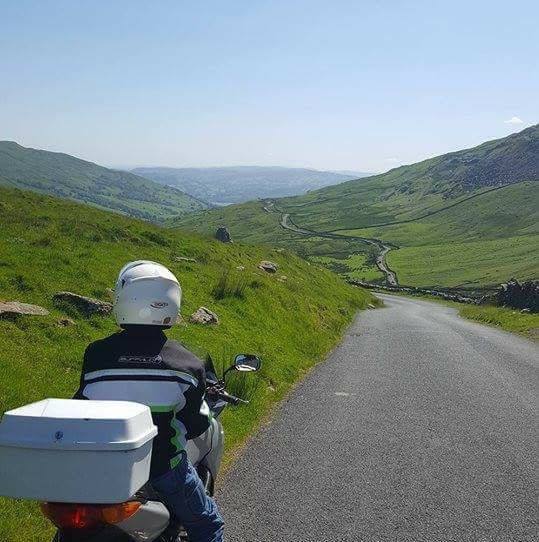
In honour of Robert Frost and Paul Herron, and written after one pal decided to wander off down a road when we three friends went the other.

The biker sat on the hill side, thinking of his future
He pondered the twisted route that he would now take.
And as he sat there, thinking of the delights ahead
He thought of the destination, the glittering lake.

19225467_467950690207591_8871314927483910324_n

He thought to himself, now should be a good time to go
Upon this, one of life’s great adventures to master.
And as he pulled the throttle back, he saw the road
Fall and appear before him, daring him to go faster.

He thought of all of those less fortunate than he;
Those for whom this sight would never please,
And chuckled to himself as he continued to ride,
A faint, but growing laughter that would not cease.

For he knew the truth of it all, the one, undeniable fact
That there would be others who he could only call
‘The ones who travelled a road that he would not take;’
The ones whose names were not Chris, but Paul.

FB_IMG_1574167482058

Writing Rules

The last time I taught was a few weeks ago. I started a job not knowing I had broken my foot when I dropped my motorbike on the thing, the day before I started, so in time, I had to stop the job, but in the last lesson, something happened. I asked the A Level students I was teaching to write something for me and to write it properly. They all looked at me slightly quizzically. I hinted at the two rules for writing in such a way that I knew they would be confused. I then had to tell them the difference between typing and hand writing, for exam purposes. You are, after all, chasing points in an exam.

The exam you are taking has something called a “mark scheme,” which the marker has to use to mark your exam scripts. It will say that to get so many marks, which is an A*, you have to do this and that, but it will specify one thing entirely and if the marker does not see it in your writing, then he or she has to mark you DOWN. It is called SPAG in GCSE English and also A Level GCE. Spelling, Punctuation And Grammar. But the thing it then specifies is that in GCSE, to get a C, your hand written work has to be paragraphed properly, in most of the cases. Most allows the marker to allow the odd error.

In other words, the first word has to start on the red line, or black line at the left. Then, when you start the next paragraph, when hand writing, there should be no line missed. You are not typing the answer after all and pressing ENTER once or twice, depending on the word processor you are normally using. For those who are typing an answer because of Special Needs provision, then go ahead and use ENTER as normal.

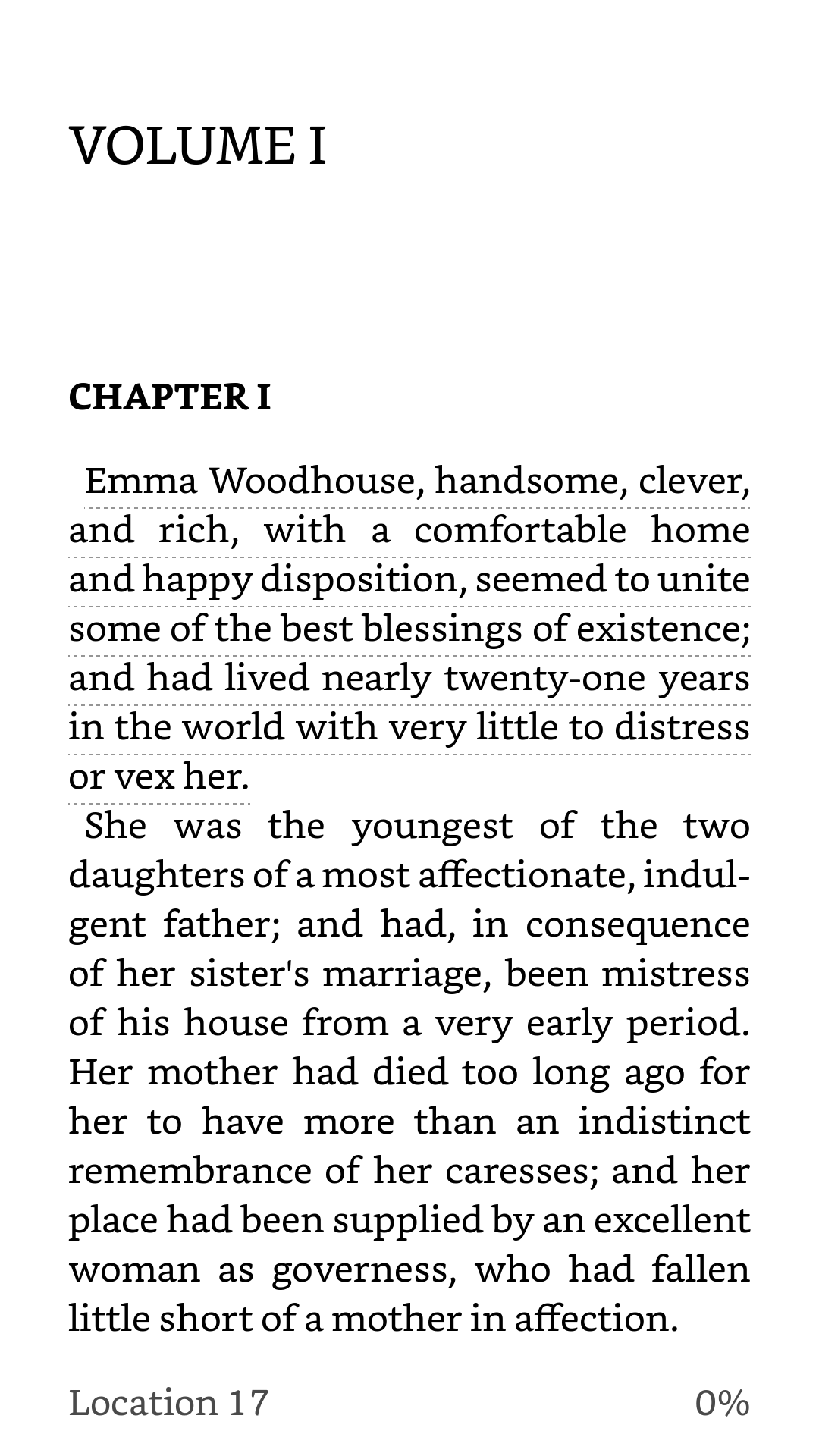
Otherwise, it should, when hand written, look like any good novel, so here is an example. It is written by Jane Austen. It is the opening to her book called Emma.

Screenshot_20200303-184427

Note the beginning of the second paragraph. Yes, this is typed because it is in a book, but her manuscript went to the publisher as a hand written text and would have been exactly the same. Keep that in mind. Note how and where the second paragraph actually starts. No missed lines. Just the next line down and a small indent, the width of your pinky [little] finger.

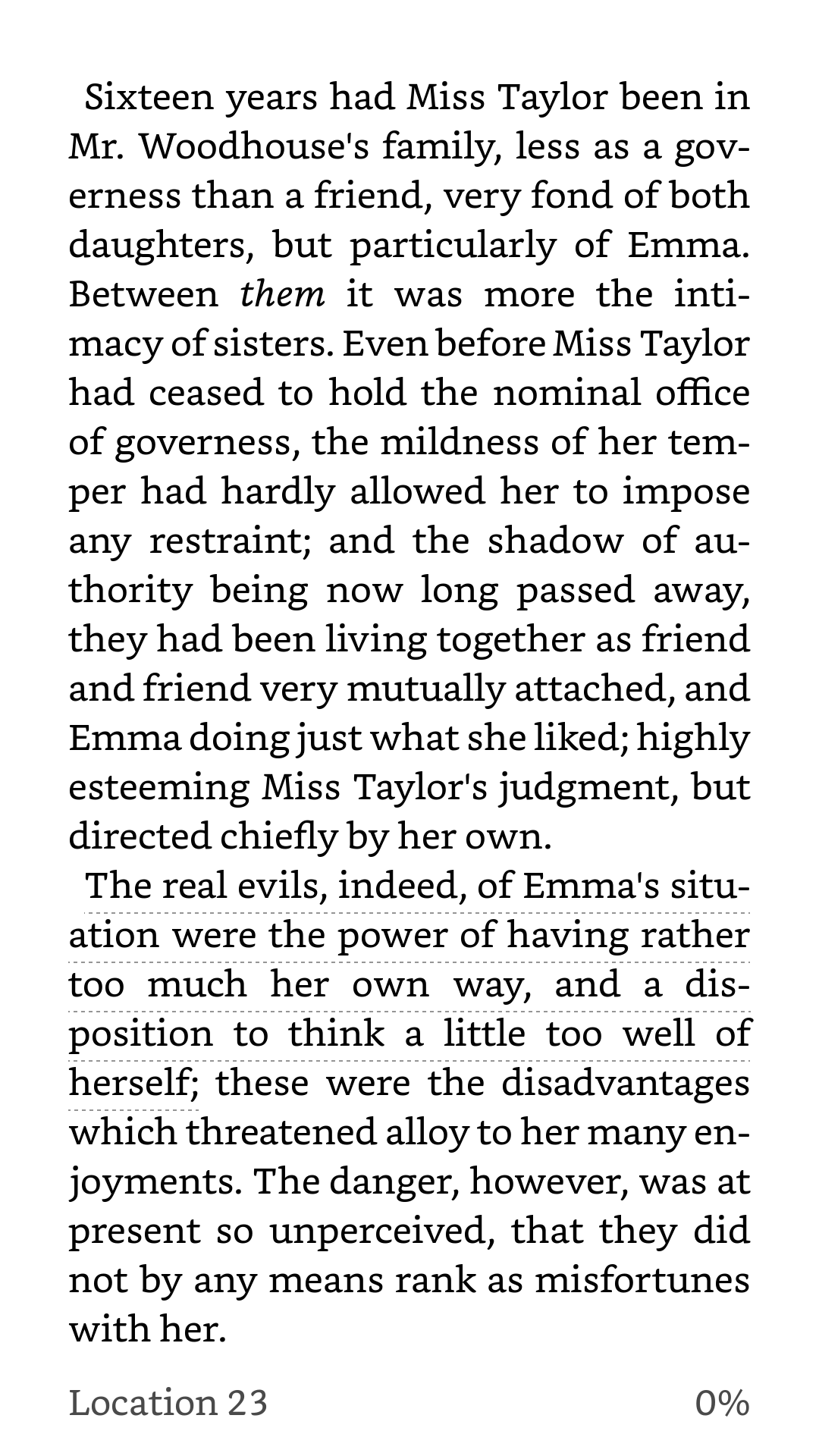
Now notice the next paragraph break…

Screenshot_20200303-184431

Yet again, no missing line and just an indent.

That is how you do it. If you, like so many students I have taught, say to your tutor, “I don’t give a damn about doing it like that,” as has been said to me in my last job, then my response is the one I gave to this young lady. My reply was forthcoming, short and swift.

“Don’t expect anything higher than a D then!”

Ask yourself what grade you want. Then write clearly and properly – a new paragraph is started when there is a new subject or a movement in time. It also has to be started in the right place.

You have been warned!

MV5BOTRiYTBhODQtZTkxOC00MzcwLTlkOTctNWQ5ZTU3NmUxMzc5XkEyXkFqcGdeQXVyMTkxNjUyNQ@@._V1_SY1000_CR0,0,1436,1000_AL_

Unsuspecting Populations

Chances are that one day soon, we shall all be wickedly wiped out
Of our life on this earth by a single, deadly, disturbing virus.
Rationale and logic dictates that this will always be the case;
Of that, we can be certain, as certain as God’s love for us.
No one will be safe. Everyone will be at risk. Those who are left
Alone on this earth will be the fortunate few who are immune;
Virtually indestructible because their blood will be the purest
In every way, able to withstand the hazards and commune
Regally with the thing that destroys the rest of humanity.
Unsuspecting populations will be demolished from this earth;
Showing us all just how tragic and fleeting all life is [really].

Analysis

Today’s piece is not going to have a lengthy analysis, but I ask a simple question. How long does it take you to realise what sort of poem this is? Can you name the type of poem? If you cannot, then you need to learn some more technical terms.

Task

Now try to analyse it, looking at how the writer has used language and structure, the two things that Language papers tend to question you on.

The Heart Beat

The Heart Beat
Robert Johnson

The practiced, perfect percussion of a heartbeat
Is the one thing in our life that keeps us all going,
From the day to day things of our troublesome lives
To the harder things to which we are also striving.

That regular, robust, percussion filled heart beat
Keeps us all well on the straight and the narrow;
Helping us to sense the emotional aspects we feel
In a life that is usually filled with all forms of sorrow.

But that punctual heart beat can also miss a beat,
When something so subtly shocking comes on by;
Those times in life when all we can do is question
The truest and real nature of why we even try.

But that self same heart beat can surprise us,
In ways that sometimes seem all too unspeakable;
When what we believe about those we know
Is challenged and we act on the unthinkable.

That same heart, it beats to a regular, robust, rhythm
Of a life that is led that needs to be filled with love.
But sometimes, we find that this simply cannot be
As we walk through the pain of the push and shove.

So as we walk along this pathway of this life,
Let us think more about those people who we meet.
Let us be kinder, more generous to all that we see
And more caring for all those people we greet

For this emotive life is blessed, if we would let it be so.
For life is a blessing that we have the privilege to share.
So why not be more thoughtful of others who share
This wonderful experience for which we all care.

The Window Pane

A light shines through the perpetual glass
As the faithful come to sing and pray;
They take their seats and they then begin
On that eventful, Godly, sunny day.

The preacher speaks and intones
That they should look for balance,
In a world that seems to be without
All forms of challenge or chance.

So many panes of glass appear to me
As my gaze turns away from the preacher
And my gaze lights on the window pane
So alone, on its own, a very special feature.

The pane sits in the middle of fifty panes
All letting in the glory of the sunny days,
But this one is plain glass whereas the rest
Are stippled and ribbed, letting in God’s rays.

So many panes are all the same, all alike
In beauty, in simplicity, in gracefulness;
But there is one that is slightly different
In its silent confessional; ready to confess.

And I sit still and think of all the people there.
As I stare around the room, I see them all;
Sitting there, waiting to be blessed by the Lord
Contemplating the nature of their fall.

I am that solitary, single pane of glass,
Alone and bereft of the truth that I know
Is the message that the preacher will bring
That it is I who needs to think of where I go.

For my journey is not the path so easily trod.
Mine is the road less travelled by most
And as I stare at that single pane of clear glass,
I am reminded of the ultimate cost.

I think of the times when I have not shown the love.
I think of the times when I have failed the Lord.
But I know that in my weakest hour of need
I have held on to the one true and holy word.

I have chosen to walk a different path to many,
A journey with the Lord that only few can take.
Will you join me on that journey this day?
It will be the best decision you ever make!

Robert Johnson
March 2019

Drift Away – A Song Lyric

The following is for any singer out there who wishes to use this to record it. Just so long as I get the usual credits and royalties, that will do me. I wrote it to send it to Rosanne Cash.

Drift Away
Robert Johnson
©️2019

In my dreams you’re near me.
In my mind, you’re so far away.
When I think of us together,
I still often wonder why.

Why did you leave me?
Why did you slip away?
What was it that I did
To make you drift away?

You’re everything to me.
My every thought of the day.
Your memory will never fade
But you still drift away.

Why did you leave me?
Why did you slip away?
What was it that I did
To make you drift away?

As I rise from my stupor,
And think of the coming day;
I hear your voice beside me,
As I plead with you to stay.

Why did you leave me?
Why did you slip away?
What was it that I did
To make you drift away?

I’m sorry for my temper.
I’ll try to change every day.
But there’s something about me
That makes you drift away.

Why did you leave me?
Why did you slip away?
What was it that I did
To make you drift away?

I wonder why you left me.
I wonder where you’ve gone.
I hope it’s up to heaven,
You’ll always be my only one.

Why did you leave me?
Why did you slip away?
What was it that I did
To make you drift away?

Mother, please don’t see me
Flound’ring my life away,
For your light shines forever
Even though you drift away.

Why did you leave me?
Why did you slip away?
What was it that I did
To make you drift away?

This was written in about five minutes, based on about three songs I was listening to at the time; George Jones’ famous love song, a song by Rosanne Cash when she sung at her father’s memorial, singing I Still Miss Someone and another one, which has slipped my memory for now.

Feel free to analyse, use, share or enjoy.

RJ. January 2020